
A pilot unit’s real product isn’t what it sells, but the scalable operational blueprint it generates for future franchisees.
- Success requires intentional stress-testing through controlled “failures,” not just smooth, unrealistic operations.
- Financial data must reflect real-world franchisee constraints, avoiding the “Golden Child Syndrome” of overfunding that skews viability.
Recommendation: Treat your pilot unit as a living corporate university, relentlessly focused on codifying every process into a trainable, replicable system.
For any aspiring franchisor, the dream is replication: a powerful brand and operational model that can be successfully stamped out across dozens, or even hundreds, of locations. The conventional wisdom is to launch a pilot unit to “test the concept” and “prove profitability.” This approach suggests that a smooth, problem-free, and highly profitable first store is the ultimate sign of readiness. But this perspective is dangerously incomplete.
A pilot that never encounters a problem teaches you nothing about resilience. A unit propped up with unlimited corporate funds provides a false sense of financial viability. The true purpose of a pilot unit is not simply to succeed, but to meticulously document *how* to succeed. It should be less of a showroom and more of a strategic laboratory—a dynamic environment designed to stress-test systems, codify solutions, and ultimately produce the single most valuable asset for a franchise network: a bulletproof operational blueprint.
This shift in mindset from “proving” to “prototyping” is the difference between a franchise that struggles to scale and one built for exponential growth. This guide will deconstruct the process of building and running a pilot unit as a true training ground, focusing on how to embrace failure, capture processes, ensure financial realism, and transform your first location into a university for your future partners.
This article details the strategic steps to convert your initial store into a robust blueprint for your entire franchise network. The following summary outlines the key stages we will explore, from embracing strategic failure to establishing scalable governance.
Summary: Building the Franchise Blueprint: From Pilot Unit to Network Standard
- Why Your Pilot Unit Must Fail at Least Once to Succeed as a Prototype?
- How to Capture SOPs Live on the Pilot Floor Without Disrupting Service
- Urban Center or Suburbs: Where Should You Launch Your Stress-Test Pilot?
- The “Golden Child” Syndrome: Why Overfunding Your Pilot Fakes the Data
- Transforming Your Pilot Unit Into a Corporate University for New Franchisees
- How to Deploy Standardized Management Systems Across 50 Locations Without Chaos
- How to Capture SOPs Live on the Pilot Floor Without Disrupting Service
- How to Establish Network Governance That Balances Central Control with Local Autonomy
Why Your Pilot Unit Must Fail at Least Once to Succeed as a Prototype?
The goal of a pilot unit is not to create a flawless operational record; it is to discover every potential breaking point before your franchisees do. A unit that runs perfectly from day one is a unit that hasn’t been tested. True operational resilience is forged by fire. This means embracing intentional failure as a data-gathering tool. By engineering controlled stress scenarios—like a sudden supplier disruption or a simulated equipment breakdown—you force your team to develop and document contingency plans. These documented solutions become invaluable chapters in your operations manual.
This rigorous approach is about building a system that anticipates chaos. While franchise industry experts suggest that running at least 3 pilots over a period of a year provides a measure of consistency, the quality of that testing is what truly matters. It’s about proactively searching for weaknesses. A “Failure Autopsy” framework should be implemented to distinguish between “Good Failures” (which reveal system weaknesses) and “Bad Failures” (caused by negligence). Every friction point, question, and moment of confusion from the pilot team is a golden opportunity to refine your training and support materials.
Case Study: AeroSports’ Validation Journey
AeroSports provides a powerful example of this principle in action. They began with a single pilot center in Thrissur, Kerala, to test a critical hypothesis: would the niche concept of aero modeling be accepted in small towns? This targeted test was designed to validate market demand in a specific, replicable environment. Only after this successful validation did they expand into larger metros and tier-I cities. This disciplined, test-first approach allowed them to scale confidently, growing to 80 centers since 2009 because they had already stress-tested their core market assumption.
By intentionally seeking out and solving problems within the controlled environment of the pilot, you are not just fixing issues for one store; you are creating a scalable, resilient blueprint for the entire network.
How to Capture SOPs Live on the Floor Without Disrupting Service
An operations manual built in a quiet office is a work of fiction. A truly effective Standard Operating Procedure (SOP) is born from the reality of the service floor, capturing the unwritten rules and tacit knowledge that make an operation flow. The challenge is documenting these processes without grinding service to a halt. The key is to adopt a mindset of “living documentation” rather than a one-time project.
This involves equipping a designated “process champion” or the unit manager with tools for unobtrusive capture. This can include tablets with simple forms, voice memo apps for quick notes, or even wearable cameras (with staff consent) to record complex manual tasks. The goal is to capture the raw process first and refine it later. For example, a 15-minute debrief at the end of each shift to review “what worked, what was messy, and what we did to fix it” can yield more practical insights than weeks of theoretical writing.
The British Franchise Association (BFA), for instance, has stringent requirements for its members. The BFA mandates that franchisors must pilot their concept for a minimum of one year in at least one location before franchising. This isn’t just about proving profitability; it’s a mandatory period to ensure that all operational procedures are thoroughly tested, documented, and refined while maintaining high service standards, as highlighted by the rigorous pilot testing standards they enforce.
This real-world approach ensures your SOPs are not just a set of rules, but a practical guide that reflects the best and most efficient way to perform tasks under pressure. It builds a manual that your future franchisees will actually use because it’s grounded in reality.
Urban Center or Suburbs: Where Should You Launch Your Stress-Test Pilot?
The location of your pilot unit is one of the most critical strategic decisions you will make, as it defines the operational and financial variables your entire system will be based on. The choice between a high-density urban center and a more stable suburban location is not about which is “better,” but which is more representative of your target rollout strategy. An urban location will stress-test your logistics, delivery systems, and ability to manage a transient workforce, but its high revenue potential may not be replicable elsewhere.
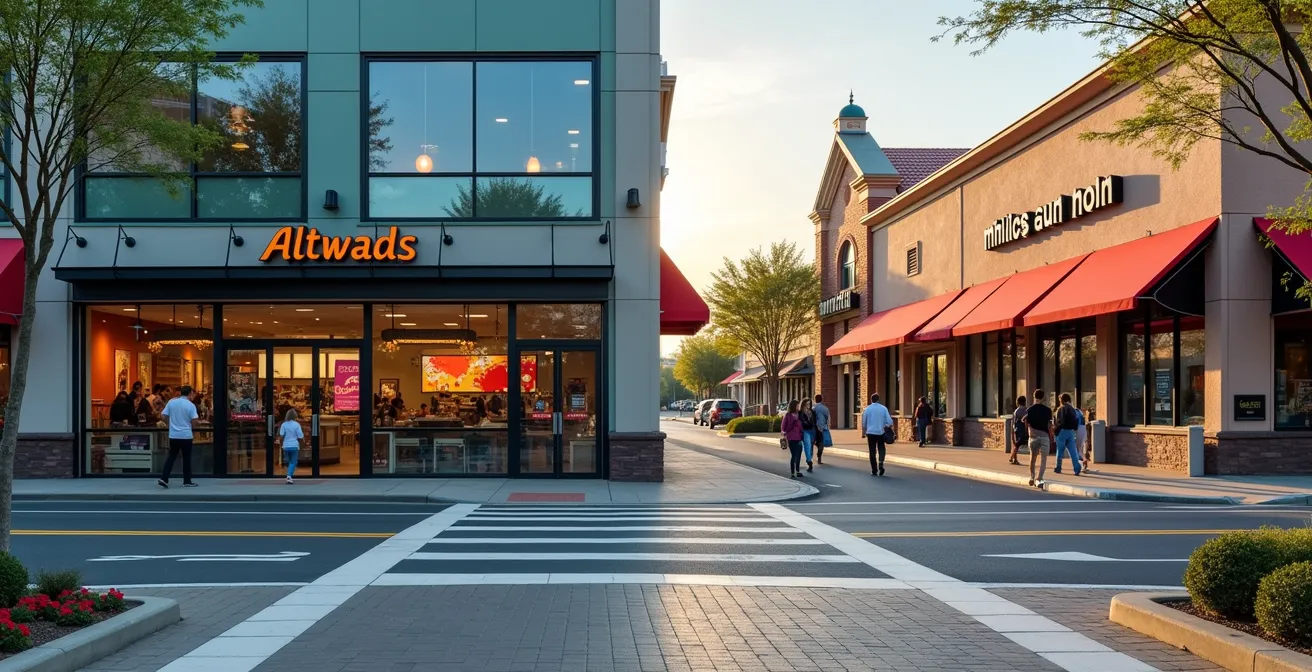
Conversely, a suburban unit often offers a more stable customer base and workforce, making it an ideal environment to perfect brand consistency and build a replicable financial model. Your choice should be a deliberate stress-test of your most likely expansion environment. If your plan is to conquer major cities, the complexities of an urban pilot are a necessary challenge. If your model is built for community-focused markets, a suburban pilot provides more realistic and scalable data.
This decision directly impacts the validity of your financial projections and operational procedures. The following table breaks down the key factors to consider when weighing these two distinct environments.
| Factor | Urban Center | Suburban Location |
|---|---|---|
| Operational Complexity | High (delivery logistics, transient staff) | Lower (stable workforce) |
| Customer Diversity | Highly diverse demands | More homogeneous |
| Brand Consistency Testing | Challenging | Ideal for consistency |
| Talent Acquisition | High-turnover market | Local employer appeal |
| Economic Viability | Higher costs, higher revenue potential | Most replicable financial model |
Ultimately, the pilot’s location must mirror the future, not an idealized version of it. Choosing the right testing ground ensures the data you collect and the systems you build are relevant and ready for real-world deployment.
The “Golden Child” Syndrome: Why Overfunding Your Pilot Fakes the Data
One of the most insidious traps in piloting is the “Golden Child Syndrome.” This occurs when the franchisor, desperate for the pilot to succeed, insulates it from real-world financial pressures. The unit is given an unlimited marketing budget, the best equipment without regard to cost, and staffing levels that a real franchisee could never afford. While this may lead to a beautiful, profitable store, the data it produces is dangerously misleading. It creates a model that is impossible to replicate under normal franchisee-level economic constraints.
While overall franchise success statistics show that 92% of franchises are still open after two years, this success is built on models that have been proven to be financially viable under realistic conditions. A Golden Child pilot sidesteps this crucial validation. To avoid this, you must enforce financial realism from day one. The pilot unit must operate on a P&L that mirrors what a franchisee will experience. This includes accounting for simulated franchise fees, marketing fund contributions, and realistic debt service.
Implementing “scarcity sprints”—periods of deliberately restricted budgets—can be a powerful tool. It forces the pilot team to innovate and find cost-effective solutions, just as a franchisee would. These resourceful solutions are then captured and become part of the operational blueprint. Here are key strategies to maintain financial realism:
- Enforce a franchisee-level P&L, including simulated royalty and marketing fees.
- Structure funding in tranches that are only released when specific operational and financial KPIs are met.
- Track and document all budget constraints and the innovative workarounds developed by the team.
- Mandate the use of standard, approved equipment and suppliers, not premium one-off solutions.
By treating the pilot unit’s budget with the same discipline you’d expect from a franchisee, you ensure that its success is not just possible, but, most importantly, replicable.
Transforming Your Pilot Unit Into a Corporate University for New Franchisees
The ultimate function of a pilot unit extends far beyond testing. It must evolve into your network’s living “Corporate University”—a center of excellence where new partners are immersed in your culture, systems, and standards. This is critical because classroom-style training alone is notoriously ineffective. In fact, sobering franchise training statistics reveal that 95% of what franchisees learn in certification is forgotten within 72 hours without immediate practical application.
Your pilot unit is the antidote to this knowledge decay. It provides the hands-on, real-world context that makes learning stick. The training program should be a blended model: foundational classroom sessions on theory, finance, and marketing, followed by extensive, supervised “on-the-floor” time in the pilot unit. Here, franchisees don’t just learn the manual; they live it. They work alongside your best-trained staff, experiencing the pace, solving real problems, and mastering every role from the front line to management.
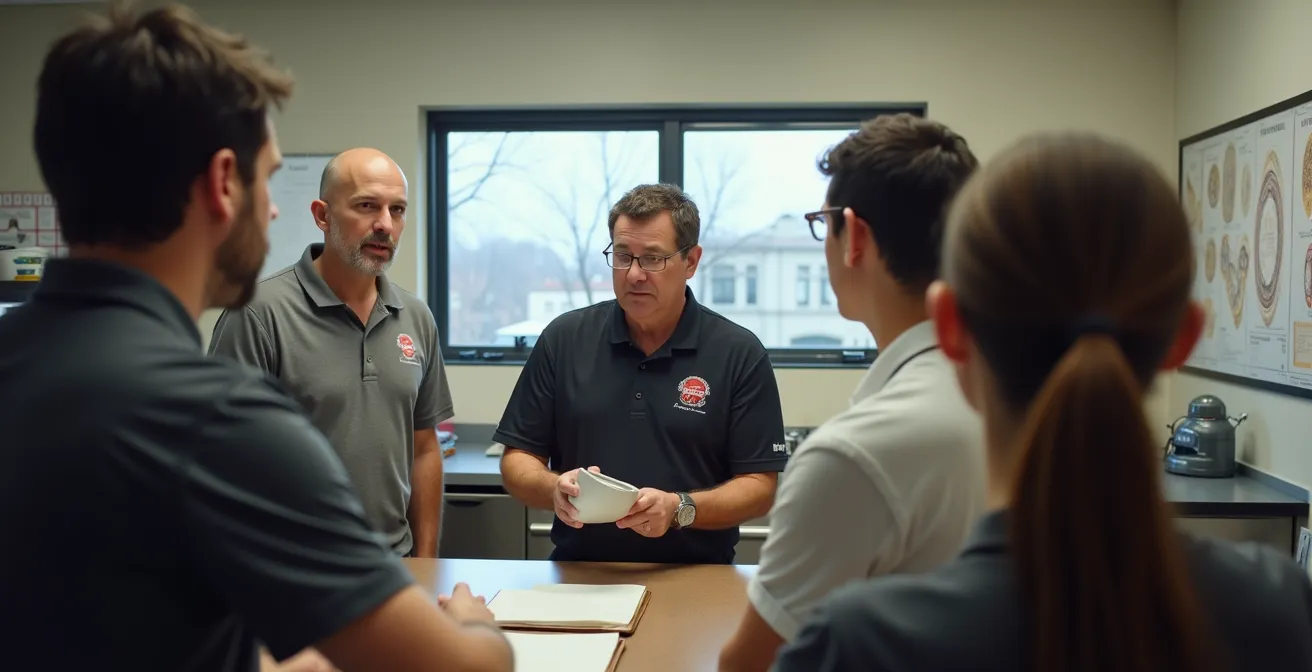
This immersive approach transforms training from a theoretical exercise into muscle memory. The pilot unit becomes the benchmark for “what right looks like,” providing a tangible standard that franchisees can take back to their own locations.
Case Study: The American Family Care (AFC) Training Model
American Family Care (AFC) exemplifies a robust, blended training system. Their process begins with a comprehensive two-day corporate training at their Birmingham, Alabama headquarters, covering everything from pre-opening tasks to daily operational flow. Crucially, this is not the end of the training. As a franchisee’s opening date approaches, an AFC field support team provides on-site training to finalize preparations and drill the new team. This model combines centralized, standardized education with localized, hands-on implementation, ensuring that theoretical knowledge is effectively translated into practical operational skill right before launch.
When your pilot unit is your university, you are not just selling a franchise; you are transferring a living, breathing operational capability.
How to Deploy Standardized Management Systems Across 50 Locations Without Chaos
Developing a perfect system in a single pilot unit is one challenge; deploying it consistently across a growing network is another entirely. As a network scales, the risk of “operational drift”—where each location slowly develops its own variations of the core system—becomes a major threat to brand consistency. With franchise industry data showing that 52.3% of all U.S. franchises are owned by multi-unit operators, the need for a scalable deployment strategy is more critical than ever.
Chaos is avoided through a structured, repeatable rollout process, not by simply emailing out the operations manual. The key is to leverage the expertise forged in your pilot unit. This means creating a dedicated “Deployment Pod”—a small team of one or two experts from your pilot store who can provide on-site support for new location launches. Their role is not to run the new unit, but to train the franchisee’s team and ensure the standardized systems are implemented correctly from day one.
This human element should be supported by a robust digital toolkit, a “Franchise-in-a-Box” that includes:
- Pre-configured Software Templates: All POS, inventory, and scheduling software should be ready to go with your network’s standard settings.
- A Video Tutorial Library: Create short, single-task videos filmed at the pilot unit that demonstrate every key process, from opening procedures to handling a customer complaint.
- Role-Specific Digital Checklists: Provide clear, 30-day onboarding checklists for every position, ensuring a consistent ramp-up period for new staff.
- A Proactive Change Management Plan: All the pushback and challenges documented during the pilot phase should be used to create FAQs and training modules that address common franchisee concerns before they arise.
By systemizing the deployment itself, you ensure that store #50 opens with the same operational integrity and brand consistency as store #1.
How to Capture SOPs Live on the Floor Without Disrupting Service
While the tools and methods for capturing processes are crucial, they are ineffective without the right culture. The second, more nuanced challenge of live SOP documentation is fostering a team environment where process improvement is a shared responsibility, not just a manager’s task. If employees view documentation as a form of micromanagement or a distraction from their “real work,” your efforts are doomed.
The culture must shift from “this is how we’ve always done it” to “is there a better way to do this?” This begins with empowerment. Your pilot unit staff are your first and best source of innovation. Give them a simple, frictionless way to submit process improvement ideas. This could be a dedicated digital channel, a physical suggestion box, or a standing agenda item in weekly team meetings. When an employee’s suggestion is tested and adopted into the official SOP, celebrate that contribution publicly. This creates a powerful feedback loop, showing the team that their expertise is valued and has a direct impact on the brand’s evolution.
Furthermore, integrate process documentation into job roles. For a shift supervisor, a key performance indicator (KPI) might be to document or refine one process per week. For a front-line employee, it might involve participating in a “process huddle” to walk through a task on camera for the video library. By making documentation an explicit part of the work, you normalize it. It becomes a routine aspect of operational excellence, not an occasional project. This cultural foundation ensures that your operational blueprint is not a static document but a living system that continuously evolves and improves with the business.
Key Takeaways
- A pilot unit’s primary goal is not profit, but the creation of a replicable operational blueprint through intentional stress-testing.
- Financial realism is non-negotiable; avoid the “Golden Child Syndrome” by operating the pilot under the same budget constraints a franchisee will face.
- The most effective training happens when the pilot unit functions as a “Corporate University,” providing hands-on, real-world immersion for new partners.
How to Establish Network Governance That Balances Central Control with Local Autonomy
As your network grows, the final pillar of a scalable system is governance. This is the delicate art of balancing the franchisor’s need for brand consistency with the franchisee’s need for local operational autonomy. A framework that is too rigid stifles innovation and frustrates ambitious partners. One that is too loose dilutes the brand and leads to inconsistency. The solution lies in clearly defining what is “Sacred” and what is “Malleable.”
“Sacred” processes are the non-negotiable brand standards: the core recipe, the primary logo usage, the key customer service promises. These must be uniform across the entire network. “Malleable” processes are areas where franchisees can adapt to local conditions, such as local marketing initiatives, community engagement, or certain staffing decisions. This distinction provides clarity and empowers franchisees to act like true business owners within a defined framework. The high satisfaction seen in franchising, where approximately 90% of franchisees renew their agreements, is often a direct result of this successful balance.
Case Study: The Burger King Support Structure
Burger King’s franchise model is a masterclass in balanced governance. They provide a highly structured system with comprehensive support from dedicated departments in operations, marketing, finance, and technology. This ensures brand consistency globally. However, within this robust framework, franchisees operate their own businesses. The system is built on clear standards and ongoing field team support, creating a partnership where central control enables, rather than restricts, local success.
Modeling a Franchisee Advisory Council (FAC) with your pilot unit manager is a crucial first step. This creates the communication protocols for gathering feedback and reviewing proposed innovations, establishing a system for continuous improvement driven by those on the front lines.
Your 5-Point Audit for Balanced Franchise Governance
- Points of Contact: List all channels for franchisee feedback and innovation (e.g., advisory councils, formal idea submission portals, regular field consultant check-ins).
- Collecte: Inventory all existing reporting formats and key performance indicators (KPIs) to identify and standardize data collection for network-wide comparison.
- Cohérence: Confront local practices with the “Sacred” (non-negotiable) brand standards. Is every unit upholding the core brand promise?
- Mémorabilité/Émotion: Assess if local adaptations are enhancing or diluting the core customer experience and brand identity. Are they a positive innovation or a drift from the standard?
- Plan d’intégration: Define a clear, transparent process for how franchisee-led ideas are reviewed, tested (perhaps in the pilot unit), and, if successful, integrated into the network’s standard operating procedures.
With a meticulously documented and financially validated blueprint, your next step is to begin building the training modules. Start with the most critical operational process, film it in your pilot unit, and build the first chapter of your corporate university. This disciplined approach is the foundation for scalable, sustainable franchise success.