
Scaling franchise operations from a handful of units to 50+ locations often creates a fragile, chaotic tech environment where data is siloed and standards are ignored.
- True standardization relies on architecting a central “System of Record” (SoR), not just forcing identical tools on every franchisee.
- A hybrid tech stack, combining a core all-in-one suite with best-of-breed specialized applications, often provides the optimal balance between control, scalability, and innovation.
Recommendation: Prioritize architecting for data integrity and operational resilience first. The selection of specific software and tools should be a secondary step that serves this foundational architecture.
The paradox of franchise growth is that every new location is both a revenue-generating asset and a potential point of operational failure. As a CTO or CIO, your mandate is to enable this expansion, but the reality is often a frantic race to contain the chaos. Disparate point-of-sale systems, unmanaged personal devices, and inconsistent processes create data silos and security vulnerabilities that undermine the very uniformity the franchise model promises. The conventional wisdom to “choose the right franchise software” or “invest in more training” barely scratches the surface of this architectural challenge.
These approaches treat the symptoms, not the root cause. They fail to address the fundamental tension between centralized control and the need for localized flexibility. The result is a brittle ecosystem that is expensive to maintain, difficult to scale, and dangerously exposed to risks ranging from data breaches to operational downtime. This is not a failure of tools, but a failure of system design. It’s time to move beyond simply mandating software and start thinking like a systems integration architect.
The key isn’t to find a single, magical piece of software that does everything. The real solution lies in architecting a resilient, centralized System of Record (SoR)—a single source of truth for all critical business data—that allows for controlled flexibility at the network’s edges. It’s about creating a robust core that can seamlessly integrate with specialized tools, ensuring data integrity and process consistency while empowering franchisees. This article provides a playbook for designing and deploying such a system, breaking down the key architectural decisions you must make to transform operational chaos into predictable, scalable processes across dozens or even hundreds of locations.
This guide will walk you through the critical architectural decisions necessary for building a scalable and resilient technology framework. We will explore everything from securing your data perimeter to planning for worst-case scenarios, providing a clear roadmap for achieving standardization without stifling growth.
Summary: A Strategic Framework for Scaling Franchise Technology
- Why Allowing “Bring Your Own Device” Policies Creates a Data Nightmare for Franchises?
- How to Train Non-Tech Savvy Franchisees on New ERP Systems in Under a Week
- All-in-One Suite or Best-of-Breed: Which Tech Stack Suits Rapid Scale?
- The Cloud Outage Scenario: What Happens When Your POS Goes Dark on a Friday Night?
- Automating the Boring Stuff: Using Tech to Verify Opening Checklists Remotely
- How to Ensure Operational Consistency Across 10 Time Zones and 5 Cultures
- How to Use Automated Supply Chain Systems to Reduce Inventory Waste
- All-in-One Suite or Best-of-Breed: Which Tech Stack Suits Rapid Scale?
Why Allowing “Bring Your Own Device” Policies Creates a Data Nightmare for Franchises?
The allure of “Bring Your Own Device” (BYOD) is its perceived cost savings and employee convenience. However, from a systems architecture perspective, it represents an uncontrolled expansion of the data integrity perimeter. Each unmanaged personal device used by a franchisee or their staff to access business data—whether it’s email, sales reports, or customer information—is a potential vector for a data breach. These devices lack uniform security patching, anti-malware software, and access controls, creating a massive, unmanaged attack surface. The risk is not hypothetical; according to recent security research, nearly 48% of organizations have suffered data breaches linked to unsecured personal devices.
Further analysis reveals a significant gap between policy and reality, with 78% of IT leaders reporting that employees use personal devices for work without approval, even when BYOD is officially restricted. This shadow IT environment makes it impossible to enforce a consistent security posture. The solution isn’t to ban personal devices outright—a move that can harm franchisee morale and productivity. The architectural answer is containerization. By implementing a robust Mobile Device Management (MDM) solution, you can create an encrypted, isolated “work profile” on any personal device. This container separates corporate data and applications from the user’s personal space, allowing IT to enforce security policies, manage applications, and even remotely wipe the corporate container without touching personal data.
This strategy establishes a secure boundary on an otherwise untrusted device, effectively reclaiming control over your data perimeter. The key steps to implement this include:
- Deploying containerization technology like Android Work Profile or iOS managed apps to create a secure, separate work environment on personal devices.
- Implementing a central Mobile Device Management (MDM) platform for remote policy enforcement, application deployment, and compliance monitoring.
- Establishing automated checks to ensure all devices connecting to the network meet minimum security requirements (e.g., OS version, encryption enabled).
- Defining clear protocols for remotely wiping only the corporate data container in the event a device is lost, stolen, or an employee departs.
By shifting the focus from controlling the device to controlling the corporate data on the device, you can accommodate the reality of BYOD while maintaining the integrity of your System of Record.
How to Train Non-Tech Savvy Franchisees on New ERP Systems in Under a Week
Deploying a new Enterprise Resource Planning (ERP) system is the cornerstone of creating a unified System of Record. However, the success of this multi-million dollar investment hinges on a single factor: user adoption. Forcing a complex system onto franchisees who may not be tech-savvy is a recipe for failure, leading to incorrect data entry, process workarounds, and outright rejection of the platform. The goal is not just to teach them which buttons to click, but to achieve proficiency and buy-in rapidly. Industry research confirms the stakes, showing that 85% of organizations report successful ERP projects when they utilize structured and engaging training approaches.
A one-size-fits-all, week-long webinar won’t work. The architectural approach to training involves designing a modular, role-based, and continuous learning program. Instead of a monolithic training dump, break the curriculum into micro-learning modules focused on specific job functions. A cashier needs to master the POS module in a day; a manager needs a deeper understanding of inventory and reporting over a week. This “just-in-time” learning is more digestible and immediately applicable. Furthermore, a blended learning model that combines on-demand video tutorials, live Q&A sessions, and in-app guided walkthroughs caters to different learning styles and schedules.
Case Study: Nestlé’s Phased ERP Training Approach
When rolling out its global SAP implementation, Nestlé didn’t attempt a “big bang” training event. Instead, the company adopted a phased rollout strategy, beginning with less complex markets. This allowed training teams to refine their methods and build a repository of best practices. They invested heavily in comprehensive, localized training sessions, ensuring employees were not just familiar with the new system but confident in its use before full deployment. This incremental approach built momentum and internal expertise, which was critical when tackling more complex implementations in larger markets.
To accelerate adoption in under a week, the focus must be on building a “train-the-trainer” program. Identify a tech-inclined champion within each region or large franchise unit. Provide them with intensive training and empower them to become the first line of support for their peers. This creates a scalable support network and fosters a sense of local ownership over the new system, transforming a top-down mandate into a collaborative rollout.
All-in-One Suite or Best-of-Breed: Which Tech Stack Suits Rapid Scale?
One of the most critical architectural decisions a CTO faces is the choice between an all-in-one, integrated franchise management suite and a “best-of-breed” approach that combines specialized solutions. The all-in-one platform promises simplicity: a single vendor, a unified interface, and theoretically seamless data flow between modules like POS, CRM, and inventory. This approach is compelling for its predictability and reduced integration overhead, making it a strong contender for franchises prioritizing straightforward, linear growth.
The following illustration represents a modern alternative—the hybrid model. Here, a central “core” system (which could be part of an all-in-one suite) acts as the primary System of Record, while specialized “spoke” applications are integrated via APIs to handle specific functions at a higher level of performance or innovation. This architecture seeks to combine the stability of a unified core with the agility of specialized tools.

Conversely, a best-of-breed strategy offers superior functionality in each specific domain. You can choose the absolute best POS system, the most powerful marketing automation tool, and the most advanced analytics engine. This provides a competitive edge through innovation and flexibility. However, it comes at the cost of significant integration complexity. Your team becomes responsible for building and maintaining a web of APIs, and the total cost of ownership can become unpredictable. The choice has profound implications for scalability, M&A flexibility, and innovation speed.
We have used FranConnect as our franchise support software system provider for nearly 20 years. During this time, Neighborly has grown from six franchise brands to 24, including international expansion.
– Neighborly Executive, FranConnect Customer Success Story
The following table, based on an analysis of franchise management software, breaks down the key trade-offs inherent in this decision.
| Factor | All-in-One Suite | Best-of-Breed |
|---|---|---|
| Integration Complexity | Minimal – unified platform | High – multiple APIs required |
| M&A Flexibility | Limited – harder to absorb different systems | High – open APIs enable quick integration |
| Innovation Speed | Slower – dependent on single vendor | Faster – leverage specialized innovations |
| Total Cost (5 years) | Predictable subscription model | Variable with hidden integration costs |
| Scalability | Linear with user growth | Modular based on needs |
The Cloud Outage Scenario: What Happens When Your POS Goes Dark on a Friday Night?
For a modern franchise, the reliance on cloud-based systems is absolute. The central POS, inventory, and payment processing systems are the digital heartbeat of every location. But what is your architectural plan for when that heartbeat stops? A cloud outage during peak business hours—a Friday night for a restaurant, a Saturday for a retailer—is not a matter of ‘if’ but ‘when’. The financial and reputational damage can be catastrophic. Research indicates that for every hour of POS downtime, the probability of converting a customer visit into a sale can decrease by 10-15%. Without a plan, franchisees are left helpless, unable to process transactions, manage orders, or serve customers.
This is a test of operational resilience. A robust system architecture anticipates failure and has predefined protocols to ensure business continuity. The core principle is an intelligent offline mode. Your POS system must be architected to function effectively without an internet connection for a sustained period. This involves locally caching critical data such as menu items, pricing, and staff permissions. More importantly, it must be able to securely queue encrypted transaction data for processing once connectivity is restored. This prevents data loss and ensures revenue is not forfeited.
Beyond the technical solution, a comprehensive disaster recovery plan involves clear, automated communication and manual backup systems. The moment an outage is detected, alerts should be triggered to all stakeholders, from the franchisee to the regional manager and the central IT team. At the local level, an “outage box” containing analog tools can be a lifesaver. This simple, pre-prepared kit provides the means to continue operating, albeit at a reduced capacity, and mitigates customer frustration.
A well-defined emergency response protocol is not an IT document; it’s a core business process. Here are the essential components:
- Activate Offline Mode: The POS system should automatically switch to an offline mode with locally cached critical data and encrypted transaction queuing.
- Trigger Automated Alerts: An automated system should send SMS and email notifications to the franchisee, regional manager, IT support team, and PR/communications lead.
- Deploy Physical “Outage Box”: Each location should have a kit containing a manual credit card imprinter, paper order pads, and pre-calculated sales tax charts.
- Maintain Goodwill: Distribute pre-printed discount vouchers or “we’re sorry” cards to customers impacted by the disruption to maintain loyalty.
- Document Offline Transactions: All manual transactions must be documented on paper ledgers for later synchronization with the central System of Record.
This level of preparation transforms a potential catastrophe into a managed incident, demonstrating a level of professionalism that builds trust with both franchisees and customers.
Automating the Boring Stuff: Using Tech to Verify Opening Checklists Remotely
Brand consistency is built on thousands of seemingly small, repetitive tasks: checking refrigerator temperatures, ensuring restrooms are clean, verifying that promotional displays are set up correctly. Traditionally, enforcing these standards relies on manual checklists and periodic visits from a regional manager—a process that is inefficient, prone to error, and difficult to scale across 50+ locations. This is a classic challenge of process orchestration: how do you verify compliance with operational standards without being physically present? The answer lies in leveraging the Internet of Things (IoT) and automated workflows.
Instead of asking a franchisee to manually check a box, you can architect a system that verifies compliance automatically. IoT sensors are now inexpensive, reliable, and easy to deploy. Temperature sensors in walk-in coolers can automatically log data to the central System of Record, triggering an alert if temperatures fall outside the safe zone. Smart plugs can verify that essential equipment, like coffee machines or ovens, were turned on at the correct time. Motion sensors in storage areas can confirm that they were secured after closing. This is not about surveillance; it’s about automating mundane verification to free up franchisees to focus on high-value activities like customer service and team leadership.
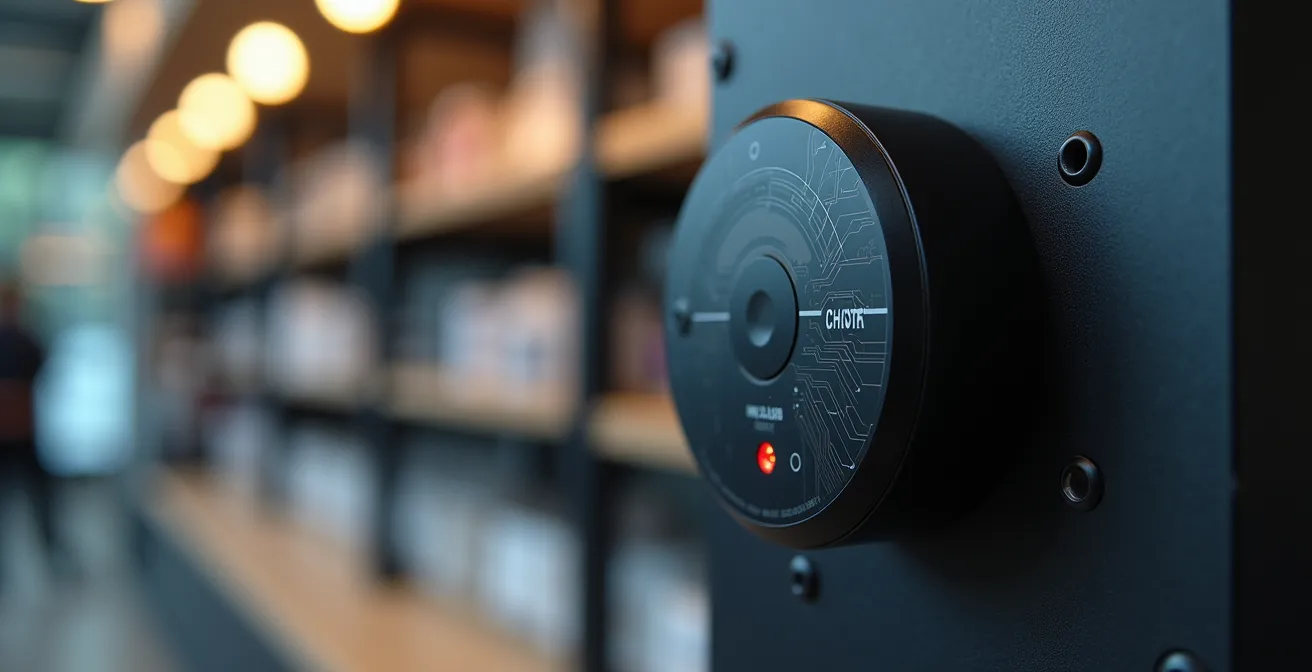
This automated data collection provides a real-time, objective view of operational compliance across the entire network. As a CTO, you can build dashboards that highlight anomalies and exceptions, allowing management to focus their attention where it’s needed most, rather than wasting time on routine checks. This data-driven approach to quality control is infinitely more scalable than manual oversight.
Case Study: Special Strong’s IoT-Powered Compliance
The adaptive fitness franchise Special Strong successfully implemented IoT sensors to automate compliance monitoring across its locations. By deploying sensors to monitor everything from equipment usage to facility conditions, the company eliminated the need for manual checklist verification. The system provides real-time data to a central platform, ensuring brand standards are consistently met without adding to the franchisee’s administrative burden. This has allowed them to maintain high levels of quality and safety as they scale.
The next evolution of this concept is to integrate visual verification. A simple, time-stamped photo of the front-of-house setup, uploaded via a mobile app and analyzed by a basic AI image recognition model, can confirm that promotional signage is correctly displayed. This transforms a subjective checklist item into a verifiable data point, ensuring the brand promise is delivered consistently in every location, every day.
How to Ensure Operational Consistency Across 10 Time Zones and 5 Cultures
Scaling a franchise globally introduces layers of complexity that go far beyond technology. How do you maintain a consistent brand experience when your operations span multiple time zones, languages, and cultural norms? The temptation is to either enforce a rigid, one-size-fits-all operational model, which can feel tone-deaf in local markets, or to allow so much local autonomy that the core brand identity is lost. The architectural solution is a framework of controlled flexibility, built upon a unified technology platform. FranConnect data reveals that franchise systems leveraging AI-powered, unified platforms grow at 5.5%, more than double the 2.6% industry average, because such platforms provide the visibility needed to manage this balance.
The first step is to collaboratively define what is truly non-negotiable. These are the core tenets of your brand: safety protocols, proprietary recipes, core logo usage, and key customer service promises. These standards must be digitally encoded into your central System of Record—for example, by making certain fields mandatory in the POS or inventory system. Everything else should be considered adaptable. Staffing schedules, certain supplier relationships, or the specific wording of a customer greeting can and should be adjusted to fit local labor laws and cultural contexts.
To manage this, your central management platform must include a formal Exception Request System. If a franchisee in a different country needs to deviate from a standard procedure, they shouldn’t just “go rogue.” They should submit a formal request through the system, which can then be reviewed, approved, and documented by the central office. This creates a transparent and auditable process for managing local adaptations without losing control. It also creates a valuable knowledge base of local market needs that can inform future global strategy.
Your Action Plan for Global Standardization
- Define Non-Negotiables: Identify and document the absolute core brand standards (e.g., safety, core product, logo use) that cannot be altered under any circumstances.
- Identify Adaptable Procedures: List operational areas where local adaptation is permissible and even encouraged (e.g., staffing schedules, local marketing, customer greetings).
- Implement an Exception System: Deploy a formal process through your central management platform for franchisees to request and document approved deviations from standard procedures.
- Establish a Reverse Mentoring Program: Create channels for multicultural managers to provide feedback and input on global policies, ensuring they are culturally relevant and effective.
- Develop Region-Specific Training: Create localized training modules that respect cultural nuances while reinforcing the core, non-negotiable brand standards.
Finally, fostering a global community through technology is crucial. A unified platform that includes forums, knowledge bases, and best-practice sharing tools allows franchisees from different cultures to learn from one another. A “reverse mentoring” program, where experienced international franchisees provide feedback to corporate, can be invaluable in ensuring that global policies are practical and respectful of local realities.
How to Use Automated Supply Chain Systems to Reduce Inventory Waste
For any franchise that deals with physical goods, from quick-service restaurants to retail boutiques, inventory is cash. Excess inventory leads to waste, spoilage, and tied-up capital, while insufficient stock results in lost sales and customer disappointment. Managing this delicate balance across 50+ locations via spreadsheets and manual ordering is a guaranteed path to inefficiency. The solution is end-to-end process orchestration of the supply chain, powered by a unified ERP that acts as the central System of Record for all inventory data.
An automated supply chain system moves beyond simple ordering. It begins with the POS system at each location. Every sale is a data point that depletes inventory in real-time. By integrating the POS directly with the central ERP, you create a live, network-wide view of inventory levels. This data can then be enriched with historical sales trends, seasonality, and even local event calendars to power predictive ordering algorithms. The system can automatically generate suggested order quantities for each franchisee, flagging unusual spikes or dips for human review. This data-driven approach minimizes guesswork and reduces the likelihood of over-stocking or under-stocking.
Case Study: Cisco Systems’ Supply Chain Optimization with ERP
While a tech giant, Cisco’s experience provides a powerful lesson in supply chain management. By implementing a unified Oracle ERP system, Cisco was able to consolidate its financial and operational data, providing unprecedented real-time visibility across its global supply chain. This allowed the company to move from reactive to proactive inventory management. The unified system enabled data-driven decisions that significantly reduced operational costs, optimized inventory levels, and minimized waste, demonstrating the power of a single System of Record in a complex supply chain.
Furthermore, this level of automation provides powerful leverage with suppliers. By aggregating demand across the entire franchise network, you can negotiate better volume pricing. The system can also track supplier performance, monitoring delivery times and order accuracy to ensure accountability. For the franchisee, the process is simplified. Instead of manually counting stock and placing orders, they receive a system-generated suggestion that they can approve or adjust with a single click. This frees up hours of administrative work, allowing them to focus on running their business, confident that they will have the right products at the right time.
Key Takeaways
- True technology standardization is not about identical tools, but about architecting a central, authoritative “System of Record” (SoR) for all critical data.
- Operational resilience must be designed into the system by quantifying risks like security breaches and cloud outages, and implementing robust mitigation plans like data containerization and offline modes.
– A successful large-scale deployment balances rigid central control with “controlled flexibility,” using technology platforms to manage and document approved local adaptations.
All-in-One Suite or Best-of-Breed: Which Tech Stack Suits Rapid Scale?
The initial comparison between all-in-one and best-of-breed systems lays out the fundamental trade-offs. However, for a CTO planning a 50+ location rollout, the decision requires a deeper, second-level analysis focused on long-term strategic goals. This is not just a technology choice; it’s a business architecture decision that will define your company’s agility, risk profile, and capacity for future growth. Your selection must be explicitly aligned with the company’s five-year plan, particularly concerning mergers and acquisitions (M&A) and innovation velocity.
If your franchise’s growth strategy involves acquiring smaller, regional chains, a best-of-breed architecture built on open APIs offers superior M&A flexibility. It is far easier to integrate a newly acquired company’s specialized CRM or loyalty program into your existing stack via an API than it is to force them to migrate off their entire system and onto your monolithic all-in-one suite. This agility can significantly accelerate the post-acquisition integration timeline and reduce friction with new franchisees. Conversely, an all-in-one suite can become a “golden cage,” making it difficult and costly to absorb companies with different technology ecosystems.
The second critical factor is vendor lock-in and innovation speed. An all-in-one suite ties your franchise’s destiny to a single vendor’s development roadmap. If their POS module falls behind the competition or they are slow to adopt new payment technologies, your entire network is at a disadvantage. A best-of-breed approach allows you to continuously swap out individual components for more innovative solutions as they emerge, keeping your franchise at the cutting edge. However, this comes at the cost of managing multiple vendor relationships and bearing the integration risk yourself.
Ultimately, the decision comes back to the philosophy of your System of Record. Do you envision your SoR as a single, monolithic platform that governs all operations (All-in-One)? Or do you see it as a lean, powerful core (like a central ERP) that orchestrates data flow between a constellation of specialized, best-in-class applications (Best-of-Breed/Hybrid)? The latter requires a more mature in-house IT and development team but offers far greater long-term flexibility and resilience to market shifts. The former offers simplicity and predictability, which may be ideal for a franchise focused on pure, homogenous replication.
Your next step is to audit your current tech stack against this resilience and scalability framework. Begin by mapping your existing System of Record, identifying its strengths and weaknesses, and pinpointing your greatest sources of operational friction and data insecurity. This audit will provide the data-driven foundation for architecting a system that can truly scale without chaos.