
The optimal franchise equipment strategy is not a simple lease vs. buy choice, but a risk-adjusted calculation of Total Cost of Ownership (TCO).
- Purchasing equipment (CapEx) can hide significant long-term costs in repairs, downtime, and energy use, eroding initial savings.
- Leasing (OpEx) preserves capital and provides a predictable cost structure, but requires diligent contract review to avoid hidden fees.
Recommendation: Model the full asset lifecycle cost—including maintenance, potential downtime, and energy consumption—to determine the true financial impact of your equipment decisions.
For a new franchise owner, outfitting a location on a budget presents a critical decision point: should you purchase your equipment outright or lease it? The conventional wisdom pits the high upfront capital expenditure (CapEx) of buying against the lower, predictable monthly payments of an operating expense (OpEx) lease. This debate often centers on cash flow and tax implications, treating all equipment as a simple line item on a balance sheet.
However, this perspective is dangerously incomplete. It overlooks the most significant financial drivers that determine profitability over the asset’s lifecycle. Issues like unexpected maintenance, catastrophic equipment failure during peak hours, and escalating utility bills are not just operational headaches; they are substantial, unbudgeted costs that can cripple a new venture. The true challenge isn’t minimizing the initial price tag, but minimizing the Total Cost of Ownership (TCO).
But what if the key wasn’t just choosing between lease or buy, but developing a hybrid strategy based on an asset’s role and risk profile? This requires a shift in mindset from a purchaser to a strategic asset manager. This guide abandons the simplistic buy vs. lease debate. Instead, we will provide a technical and financial framework to analyze your equipment needs through the lens of TCO, operational risk, and long-term strategic value. We will dissect the hidden costs of used equipment, quantify the impact of downtime, and explore how a smart equipment strategy becomes the foundation for operational consistency and network-wide success.
This article provides a comprehensive framework for making these critical decisions. Explore the key financial and operational variables that should guide your equipment acquisition strategy.
Summary: Equipment Strategy: Lease or Buy for a New Franchise Location?
- Why Buying a Used Oven Can Cost You $3,000 in Repairs in Year 1?
- How to Log Maintenance to Ensure Your Warranty Remains Valid?
- Tablets and POS: When Should You Budget for a Full Hardware Refresh?
- The Downtime Cost: How Much Revenue Do You Lose When the Fryer Breaks?
- How to Choose Energy-Star Equipment That Lowers Utilities by $200/Month?
- When to Refresh the Look: Every 5 Years or When Competitors Move?
- The Waste Factor: How Over-Ordering Perishables Kills Your Food Cost?
- Operational Consistency: How to Eliminate the “Bad Day” Factor in Your Network?
Why Buying a Used Oven Can Cost You $3,000 in Repairs in Year 1?
The allure of a low initial investment for used equipment can quickly evaporate when confronted with the realities of its operational history. A discounted price tag often conceals a history of wear and tear, leading to frequent and costly maintenance events. What seems like a savvy CapEx reduction can transform into an unpredictable and significant drain on your operating budget. The hidden costs of buying used equipment are a primary reason why a Total Cost of Ownership (TCO) model is superior to a simple purchase-price comparison.
The financial risk is substantial. A recent industry cost analysis reveals that repair incidents for a used commercial oven can range from $500 to $2,500 each. A single major failure, or a series of smaller ones, can easily surpass any initial savings within the first year of operation. This doesn’t even account for the revenue lost during downtime, where a single 4-hour repair window can equate to over $3,200 in missed sales for a high-volume location. Suddenly, the “cheaper” option has a far higher TCO.
To mitigate this risk, rigorous due diligence on the supplier is non-negotiable. Reputable dealers of refurbished equipment follow a strict restoration process and provide transparent documentation. An unverified private seller, on the other hand, presents a significant gamble. Protecting your investment requires treating the acquisition of used equipment with the same scrutiny as any major financial decision.
Action Plan: Vetting Used Equipment Suppliers
- Verify Warranty Status: Request written confirmation of any existing or new warranty coverage. Confirm that the warranty is transferable and understand all clauses that could void it.
- Collect Full Documentation: Demand the complete ownership and repair history for the unit. Gaps in the maintenance log are a major red flag.
- Audit the Restoration Process: Ask the dealer to detail their restoration process. Reputable suppliers often have a multi-point inspection and reconditioning procedure they can certify.
- Confirm Technician Certification: Ensure that all inspections and repairs were performed by certified technicians with verifiable experience on that specific brand and model.
- Plan for Integration: Assess how this used piece of equipment will integrate with your existing new or leased assets, especially concerning maintenance schedules and operational workflow.
Ultimately, a low upfront cost is irrelevant if the equipment fails to perform reliably. A thorough vetting process is the only way to distinguish a genuine value from a future liability.
How to Log Maintenance to Ensure Your Warranty Remains Valid?
A manufacturer’s or leaser’s warranty is a critical financial safeguard, but it is not unconditional. Most warranties are contingent upon the franchisee proving that the equipment has been maintained according to a specified schedule. Failure to provide a detailed and accurate maintenance log is one of the most common reasons for a denied warranty claim, leaving the owner fully liable for expensive repair or replacement costs. Therefore, a systematic logging process is not an administrative task; it is an essential risk mitigation strategy.
The process must be meticulous and verifiable. Traditional paper logs are prone to being lost, damaged, or incomplete. Modern systems utilize digital platforms, often accessible via QR codes affixed directly to the equipment. This allows technicians to log service details, parts used, and time stamps in real-time, creating an unassailable digital record. This log becomes your primary evidence in the event of a warranty dispute.
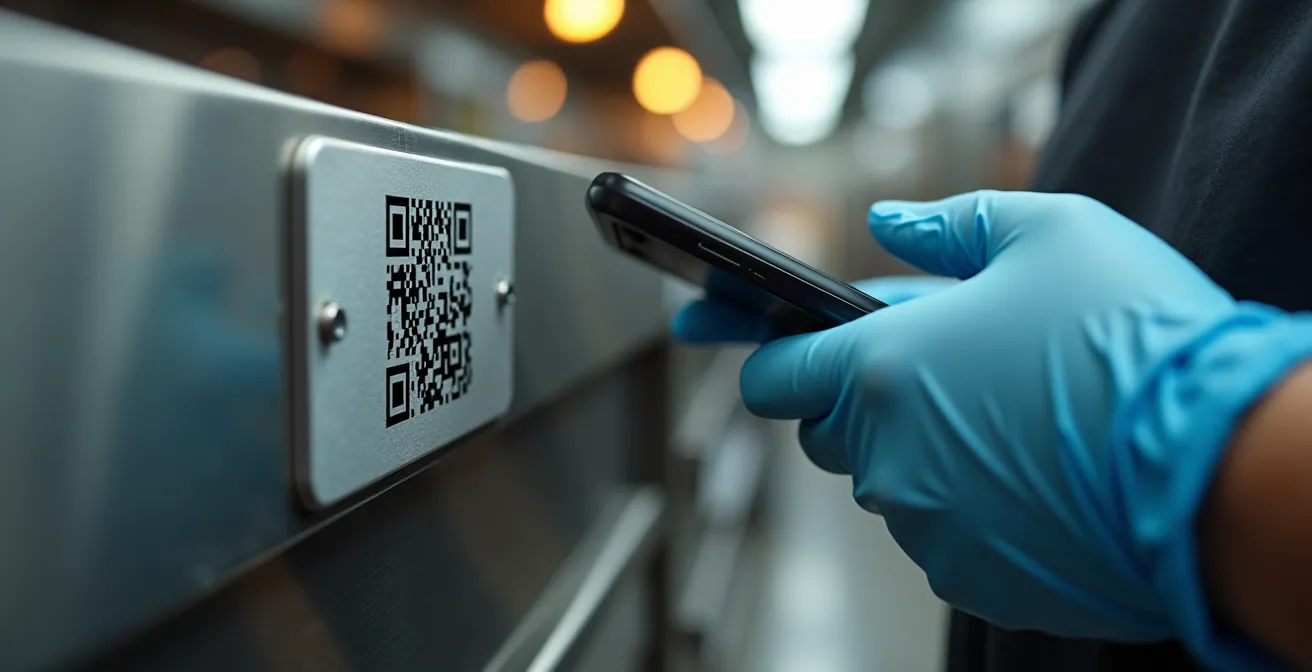
As this image demonstrates, integrating technology like QR-code based tracking simplifies the data entry process, ensuring accuracy and consistency. When a technician scans the code, they can immediately access the equipment’s full history and log the current service event. This simple action protects thousands of dollars in potential warranty claims. Furthermore, it is crucial to review lease agreements for any clauses detailing specific maintenance obligations or hidden charges related to service calls, as these can also impact your TCO.
This disciplined approach to documentation transforms maintenance from a reactive cost center into a proactive tool for asset management. It not only preserves your warranty but also provides valuable data on equipment performance, helping you forecast future capital needs and optimize the asset lifecycle.
Without a robust logging system, your warranty is merely a piece of paper. With one, it is a guaranteed financial backstop.
Tablets and POS: When Should You Budget for a Full Hardware Refresh?
Unlike a stainless-steel fryer, technology assets like Point of Sale (POS) systems and customer-facing tablets have a rapid depreciation and obsolescence cycle. Their value is not in their physical durability but in their software compatibility, processing speed, and security features. For these assets, the “buy and hold” strategy is often financially suboptimal. A full hardware refresh should be a planned, budgeted event, typically on a 3-to-5-year cycle.
Leasing becomes a powerful strategic tool in this context. It shifts the financial model from a large, periodic CapEx to a predictable, manageable OpEx. More importantly, it externalizes the risk of technological obsolescence. A well-structured lease allows you to stay current with the latest hardware and software, which is critical for maintaining competitive parity, ensuring PCI compliance, and delivering a smooth customer experience. Trying to extend the life of an aging POS system to save money can lead to slower transaction times, system crashes, and security vulnerabilities—all of which have direct negative revenue impacts.
A hybrid approach can often be the most effective, balancing cost and performance. This might involve purchasing long-lifecycle assets while leasing short-lifecycle technology. The following table illustrates the financial dynamics of different POS acquisition strategies over a typical planning horizon.
| Strategy | Initial Cost | Monthly Impact | 3-Year TCO |
|---|---|---|---|
| Lease POS System | $0-500 | Lower predictable payments | Higher total but includes updates |
| Buy POS System | 25% down payment | Higher loan payments | Lower total if kept 5+ years |
| Hybrid Approach | Moderate | Balanced | Optimal for growth |
For technology, the strategic question is not “how long can this last?” but rather “how long can this remain effective?” Aligning your refresh cycle with your lease terms ensures you are managing the asset’s effective life, not just its physical one.
The Downtime Cost: How Much Revenue Do You Lose When the Fryer Breaks?
The most underestimated variable in the TCO calculation is the cost of unscheduled downtime. When a critical piece of equipment like a high-volume fryer fails during a Friday evening service, the immediate financial loss extends far beyond the emergency repair bill. It represents lost sales, wasted labor, spoiled inventory, and, most damagingly, significant reputational harm. A single negative online review complaining about unavailable menu items can deter future customers for months, creating a long-tail revenue loss that is difficult to quantify but devastating in impact.
Calculating the direct cost of downtime is a critical exercise for any franchise owner. It transforms an abstract risk into a concrete financial figure, making the value of reliable, well-maintained equipment immediately apparent. A proper calculation should include:
- Peak Hourly Revenue: The gross revenue generated during your busiest hours of service.
- Dependent Menu Items: The percentage of your sales that rely on the failed piece of equipment.
- Wasted Labor & Food Costs: The cost of staff who are unable to perform their duties and any ingredients that spoil as a result of the stoppage.
- Emergency Repair Premiums: The additional cost for after-hours or weekend service calls compared to scheduled maintenance.
This idle kitchen represents a complete halt in revenue generation. The quietness is not peaceful; it is the sound of lost profit and mounting customer frustration. Investing in equipment with a 98% uptime record, backed by a strong warranty and a preventative maintenance plan, is not an expense—it is an insurance policy against this catastrophic scenario.
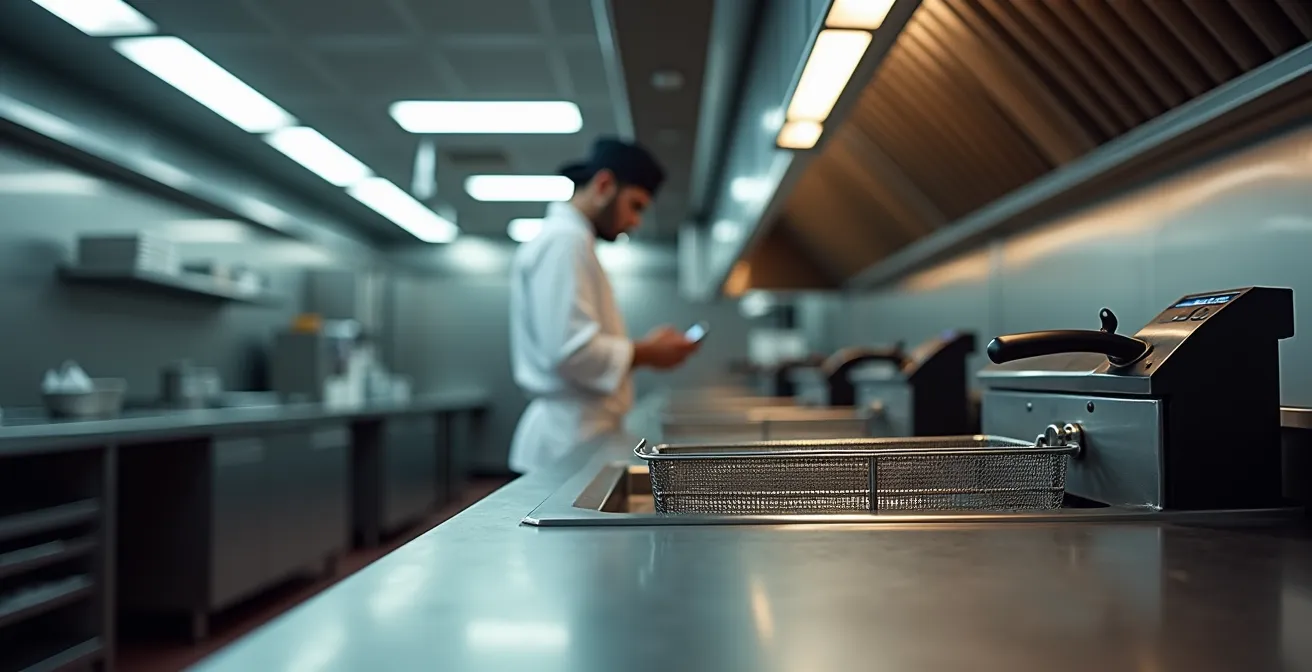
The cost of reliability will almost always be lower than the cost of failure. When analyzing your equipment strategy, the potential downtime cost should be a primary factor in your decision, often outweighing a lower initial purchase price.
How to Choose Energy-Star Equipment That Lowers Utilities by $200/Month?
Beyond maintenance and downtime, energy consumption is a major, recurring component of an asset’s Total Cost of Ownership. In a commercial kitchen, refrigeration, cooking, and sanitation equipment are significant drivers of utility bills. Selecting ENERGY STAR certified equipment is a direct strategy to reduce this ongoing operating expense. While these units may have a slightly higher initial purchase price, the return on investment through lower energy bills is rapid and substantial.
The savings are well-documented and significant. According to official data, an ENERGY STAR certified commercial kitchen can save approximately $4,000 per year on utility bills. This translates to over $330 per month in direct, bottom-line savings. Further analysis from industry experts confirms that ENERGY STAR labeled equipment can reduce energy bills by 20% to 30%. These savings directly improve your profit margin every single day of operation.
Furthermore, this equipment is often built to higher quality standards, which contributes to a longer operational life and fewer repairs. The decision to invest in energy efficiency is not just an environmental one; it is a shrewd financial move that lowers your TCO from two directions: reduced OpEx (utilities) and potentially reduced maintenance costs over the asset’s lifecycle. When negotiating a lease, it’s worth inquiring if the leasing company offers ENERGY STAR models, as the monthly utility savings could offset a slightly higher lease payment.
Choosing energy-efficient equipment is a clear example of how a higher initial investment (or lease payment) can result in a significantly lower Total Cost of Ownership, making it a cornerstone of a sophisticated asset management strategy.
When to Refresh the Look: Every 5 Years or When Competitors Move?
For front-of-house equipment—from seating and lighting to counters and digital menu boards—the asset lifecycle is tied not only to physical durability but also to aesthetic depreciation. An outdated look can negatively impact brand perception and make your location seem tired compared to a new competitor. The decision to refresh the look is a strategic one, balancing brand relevance against capital outlay. A fixed 5-year refresh cycle is a common benchmark, but a more dynamic approach is often superior, reacting to market pressures and competitive movements.
Leasing provides significant strategic flexibility for managing this refresh cycle. Instead of being locked into owned assets that are costly to replace, a lease agreement can be structured to align with your desired refresh timeline. This ensures you can update your look without a massive, one-time capital expenditure. As Gflesch Equipment Specialists note, this is a key benefit of the leasing model:
With a lease agreement, there are typically opportunities to return the equipment if it becomes obsolete before the end of its expected life, or if your business needs change. Leasing companies may be able to modify the lease term so you can upgrade your equipment and take advantage of newer technology.
– Gflesch Equipment Specialists, Benefits of Leasing Equipment vs. Buying
A proactive front-of-house strategy involves continuous market awareness and aligning your equipment lifecycle with your brand strategy. Key actions include:
- Monitoring competitor renovations and equipment upgrades in your direct trade area.
- Timing your decor refresh to coincide with the end of major equipment lease terms to bundle projects.
- Calculating the marketing and PR value of a “grand re-opening” or “new look” announcement.
- Considering modular leasing options for furniture or fixtures that allow for easier seasonal or promotional updates.
By tying your equipment strategy to your brand strategy, you transform a capital expense into a tool for maintaining market leadership and customer engagement.
The Waste Factor: How Over-Ordering Perishables Kills Your Food Cost?
While not a piece of equipment itself, food inventory is a critical operational asset whose value is directly impacted by your equipment’s performance. The “waste factor,” particularly with perishables, is a silent killer of food cost margins. This waste is often a direct consequence of an inadequate or unreliable cold storage strategy. Inefficient or improperly sized refrigeration and freezer units can lead to temperature fluctuations, spoilage, and an inability to implement a proper First-In, First-Out (FIFO) system.
Over-ordering becomes a common, yet costly, symptom of this problem. When a franchisee lacks confidence in their cold storage capacity or reliability, they may hesitate to order in economically optimal quantities, leading to more frequent, smaller orders with higher per-unit costs. Conversely, they might over-order and try to cram product into insufficient space, leading to crushed items, poor air circulation, and accelerated spoilage. Both scenarios directly increase your food cost percentage.
A well-designed cold chain, featuring modular and reliable refrigeration, is the solution. It allows for organized storage where items are clearly visible and accessible, facilitating proper stock rotation. The chef in this image is not just organizing food; they are protecting the restaurant’s profit margin by ensuring every perishable item is stored optimally to maximize its shelf life and minimize waste.

Investing in the right refrigeration equipment is not just about keeping food cold; it’s about implementing a system that actively reduces one of your largest variable costs.
Key Takeaways
- Total Cost of Ownership (TCO) is the essential metric, not the initial purchase price. It must include maintenance, downtime, and energy costs.
- Leasing provides strategic flexibility, especially for technology and front-of-house assets, but requires careful review of contract terms to avoid hidden fees.
- A disciplined maintenance and logging strategy is not administrative overhead; it is a critical action to preserve warranty validity and mitigate financial risk.
Operational Consistency: How to Eliminate the “Bad Day” Factor in Your Network?
For a franchise network, brand strength is built on operational consistency. A customer should have the exact same high-quality experience whether they visit a location in one city or another. This consistency is nearly impossible to achieve if franchisees are sourcing equipment from disparate, unvetted sources. Variations in oven temperatures, fryer recovery times, or POS software can lead to inconsistent product quality and service speed, creating the “bad day” factor that erodes customer trust.
A centralized equipment strategy, often facilitated through master lease programs, is the most effective way to ensure standardization across the network. As noted in a guide on franchise equipment financing, this approach allows franchisees to acquire the necessary, pre-approved equipment without the burden of large upfront investments. This ensures every location is using the same tools, which is the foundation for consistent training, processes, and, ultimately, a consistent customer experience.
This strategy also provides a crucial, often overlooked, benefit: a clear and manageable exit strategy. If a location underperforms and must be closed, disposing of owned equipment on the open market can be a slow, costly process, often resulting in significant losses. A lease agreement, however, defines the exit costs and provides a clear path for returning the assets, mitigating financial losses and simplifying the closure process.
| Scenario | Leased Equipment | Owned Equipment |
|---|---|---|
| Exit Costs | Early termination fees only | Must sell at loss in down market |
| Time to Exit | Immediate upon lease transfer | Months to find buyers |
| Financial Recovery | Predictable, limited liability | Unpredictable resale values |
Ultimately, a sophisticated equipment strategy is not just about outfitting a single store. It is about building a scalable, consistent, and financially resilient franchise network. To apply these principles effectively, the next logical step is to develop a customized TCO model for your specific equipment needs.